Auburn, KS
(785) 256-7300

Season long maintenance

Lawn care built around a Kansas year

Mowing, feeding, weed control, aeration, seed, sod and irrigation, scheduled against what the grass and the soil are actually doing rather than against a fixed round. Residential and commercial, out of Auburn since 2001.

The year, in order

Four seasons, each one setting up the next

Almost every lawn complaint in July was decided in March or the previous October. The programme is built that way on purpose.

Spring

Get the winter off it, then seal the soil

Clean up first, because everything else is wasted on a matted lawn. Then the pre emergent application, timed by soil temperature rather than by date, which is the entire crabgrass job for the year. Irrigation gets charged and walked zone by zone.
Summer

Protect the crown and do not scalp it

Deck height comes up as the heat arrives, so longer blade shades the crown and holds moisture in the root zone. Feeding eases back because pushing growth in July stresses a plant that is already working hard. Mowing frequency follows actual growth.

Autumn

The season that decides next spring

The heaviest work of the year on a cool season lawn. Core aeration into clay that has spent the summer compacting, overseeding straight into those holes while there is still soil warmth, and the broadleaf application that reaches the roots because the weeds are moving resources down.

Winter

Clear it, then blow the lines down

Leaves off the turf before they mat and bring snow mould with them, beds cut back or left standing depending on what is in them. Irrigation gets winterised before the first hard freeze, which is the cheapest visit of the year to book and the most expensive one to skip.

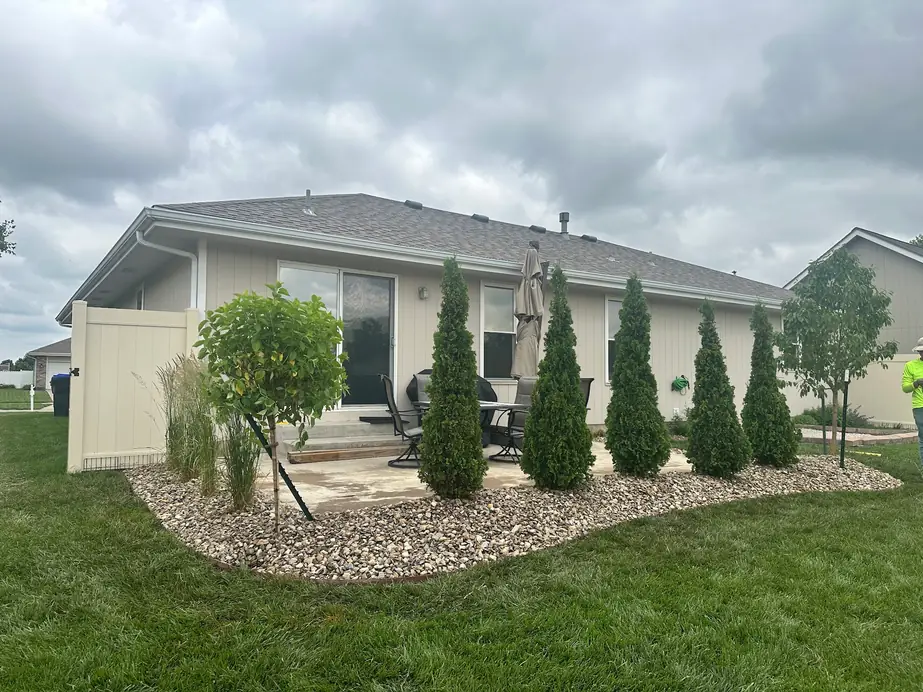
River rock foundation bed with a row of young arborvitae and ornamental grasses running against clean cut turf

Why clay changes everything

Most lawn problems here are the soil, not the grass

Clay squeezes shut under traffic and under its own wetting and drying. Once the pore space closes, water runs off instead of soaking in and roots stay in the top inch or two because that is the only place they can breathe. Then the first dry fortnight in July finds those shallow roots straight away.

That is why aeration matters more in this part of Kansas than it does on lighter ground, and why watering advice that works elsewhere tends to fail here. Deep and infrequent beats little and often, once the roots have somewhere to go.