Renovation
Power Raking and Overseeding
Thatch pulled out and fresh seed worked into real soil contact, so the new grass actually takes instead of sitting on top of the old lawn.
Chapter 01
Thatch, and the point at which it becomes a problem
Thatch is the layer of dead stems and roots that sits between the green growth and the soil. A thin layer is normal and useful. It insulates the crowns and holds a little moisture at the surface.
Past a certain depth it stops helping and starts shedding. Water runs across it rather than through it, fertiliser sits in it, and grass begins rooting into the thatch itself rather than into soil, which leaves the whole lawn sitting on a sponge that dries out in a week of heat.
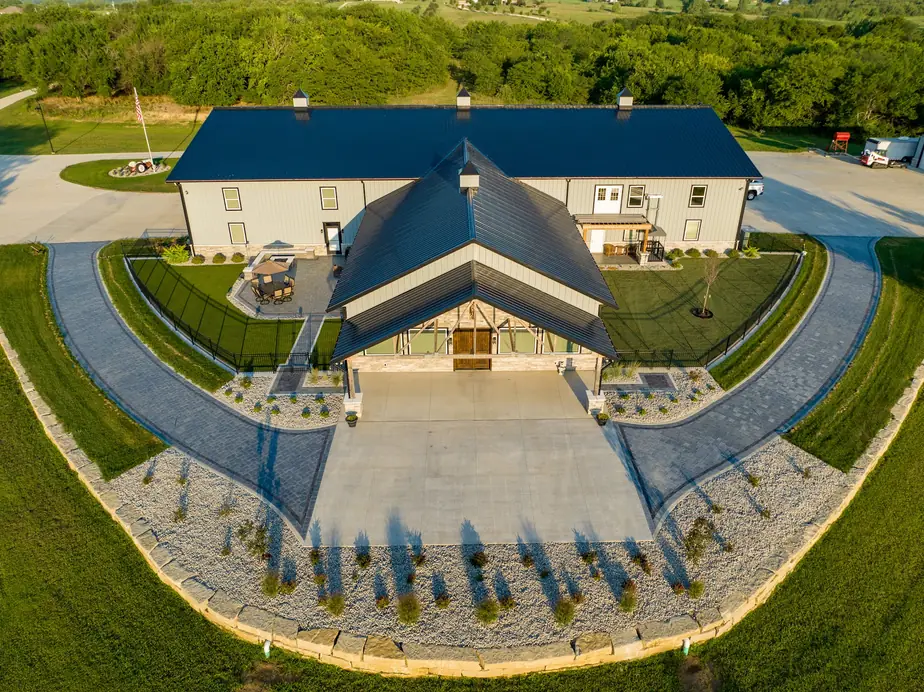
Aerial view of a large paver driveway and a circular landscape bed set into new turf
Power raking takes it out, and it looks rough first
A power rake cuts down through the thatch layer and lifts it out. It is a mechanical job and there is no gentle version of it. Worth saying plainly before the machine arrives: the lawn looks thin and scruffy for a couple of weeks afterwards, and that is the job working rather than the job going wrong.
That is also exactly why it is paired with seeding. The lawn is opened up, so the sensible thing is to put something in the opening.
Chapter 03
Seed to soil contact is the whole of overseeding
Seed that lands on thatch, or on an unprepared surface, does not germinate reliably no matter how good the seed is. It needs to be in contact with actual soil, held at a steady moisture level, for long enough to get going.
That is why overseeding follows either power raking or core aeration rather than being done on its own. Both create the contact. Broadcasting seed onto an untouched lawn is mostly feeding the birds.
Watering the establishment window
New seed needs light and frequent watering to keep the surface from drying out, which is the opposite of how an established lawn should be watered. Once germination is through, the watering steps back toward deep and infrequent so the new roots chase moisture downward.
Keep the mower off it until the new grass is up enough to take a cut, and take the first cut high.
Thatch removal, seed to soil contact and a watering schedule for the establishment window.
Renovation
It will look worse before it looks better
A power raked lawn is thin and scruffy for a couple of weeks. That is the thatch being gone rather than the lawn being damaged, and the new seed is what fills it back in.
Call the Auburn office on (785) 256-7300, or request a consultation and someone will come and walk the property with you.