A plant care guide for Kansas gardens
New planting fails for a small number of predictable reasons, and nearly all of them happen in the first two seasons.
September 22, 2026 · 3 min read
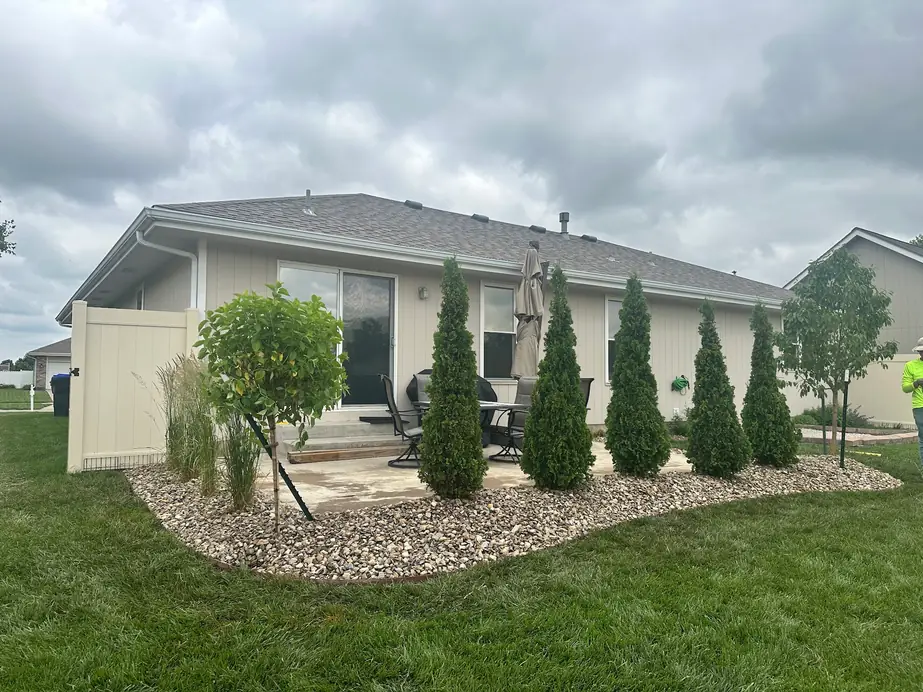
Most plants that die in a Kansas garden are not killed by the winter. They are lost in the first two summers, and usually by watering that was well intentioned and wrong. The advice below is what we hand to customers after an installation, and it applies just as well to anything you plant yourself.
Water deeply, and less often than feels right
The instinct with a new shrub is a little water every day. It is the worst schedule you can pick. A light daily sprinkle only ever wets the top inch of soil, and roots grow toward moisture, so the plant builds a shallow root system sitting right where the sun hits hardest. The first week you go away in July, that plant has no reserves at all.
Water slowly and thoroughly instead, so moisture reaches well below the root ball, then leave it until the soil has genuinely started to dry. In heavy clay that can mean a long gap between waterings, because clay holds water far longer than it looks like it does. Push a finger into the soil at the edge of the root ball. If it is damp at a knuckle deep, the plant does not need anything.
The planting hole is a bucket if you are not careful
Here is the most common failure we see in clay soil. Somebody digs a neat hole, backfills around the root ball with a rich light compost, and the plant sits there sulking for two years. The problem is that water moves easily through the light material and then stops dead at the clay wall of the hole. The hole fills up and behaves like an unglazed pot with no drainage.
Roots will not readily cross that boundary either. They circle inside the comfortable pocket instead of pushing into the surrounding ground, which means the plant never establishes and never becomes drought tolerant. Improving soil across the whole bed rather than only in the hole avoids this, and breaking up the sides of the hole rather than leaving them smooth gives roots somewhere to get a grip.
Planting depth matters more than almost anything
Set plants so the top of the root ball sits level with the surrounding soil, or very slightly above it in heavy ground. Planting deep is a slow killer. It buries the crown, holds moisture against the stem, and on trees it encourages girdling roots that strangle the trunk years later, long after anybody would connect the two events.
On a container grown plant, check whether the roots are circling the pot. If they are, tease them out or cut through them before planting. A root ball left to circle will keep circling in the ground.
Mulch, but keep it off the stems
A layer of mulch across the bed holds moisture, keeps soil temperature steadier and suppresses weed germination. All good. What does damage is mulch piled up against trunks and stems, which holds constant moisture against bark that is not built for it and invites rot and pests.
Spread it evenly across the bed and pull it back so there is a clear gap around each stem. Top it up as it breaks down rather than adding a fresh layer on top of an old compacted one every spring.
What normal looks like in year one
- Some leaf drop and some wilting in the first hot spell. The plant is adjusting to a smaller root system than it had in the nursery.
- Slow visible growth in the first season. Roots come before top growth, and that is the right order.
- Perennials that come back smaller than they went in, then stronger the following year.
- Some settling of the soil around the plant after the first heavy rain. Top the bed back up rather than mounding soil onto the crown.
What is not normal
Persistent yellowing across whole leaves, rather than at the edges, usually means waterlogging rather than drought, which catches people out because the instinct is to water more. Branch dieback progressing steadily through the season, or a plant that never pushes new growth at all in its first spring, is worth asking about rather than waiting out.
Choosing plants suited to this climate in the first place removes most of the risk. All of our plant material is sourced locally and brought in weekly, which means it has already been through Kansas heat, wind and clay rather than arriving from a gentler climate and learning on your time.
Stauffer Lawn & Landscape, (785) 256-7300
Call (785) 256-7300More articles
What to do after your lawn has been seeded
Seed does not fail in the bag. It fails in the fortnight after it goes down, almost always because the surface dried out once.
Sod care and watering in the first three weeks
Sod can look perfect for a fortnight and still be dying underneath, because the surface stays green long after the roots have dried.